

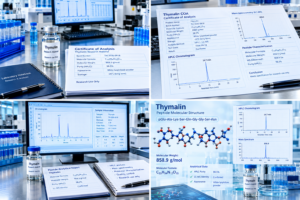
Thymalin Research Material USA: Research Overview, Quality Standards & Laboratory Considerations
Thymalin research material USA is a search term used by researchers, analytical laboratories, peptide scientists, and other professionals looking for information about Thymalin as a laboratory research material. When evaluating a peptide-related research material, identity, documentation, analytical testing, handling information, and clearly defined intended use are important considerations.
This guide provides a research-focused overview of Thymalin, laboratory material selection, analytical documentation, quality considerations, and responsible sourcing in the United States.
Research-use notice: Thymalin research material described in this article is intended solely for legitimate laboratory and scientific research. It is not presented as a drug, dietary supplement, diagnostic product, or treatment. Nothing on this page should be interpreted as instructions for administration to humans or animals.
What Is Thymalin Research Material?
Thymalin is a name associated with thymic-derived peptide research material and appears in chemical and scientific databases. PubChem lists a substance record for Thymalin with CAS 79621-14-0 and identifies it under immunologic-factor classifications.
Importantly, Thymalin should not automatically be treated as synonymous with thymulin. Thymulin is a separately characterized nonapeptide with a defined molecular formula and molecular weight in PubChem.
For laboratory purchasing and documentation, researchers should therefore verify the exact material identity, specification, nomenclature, and analytical documentation supplied with a particular lot rather than relying solely on a product name.
The phrase Thymalin research material USA generally indicates interest in material intended for laboratory investigation rather than consumer use. A properly documented research material should be accompanied by information that allows qualified researchers to understand what was supplied and how its quality was assessed.
Why Researchers Search for Thymalin Research Material USA
Research laboratories often need specialized materials for biochemical, analytical, molecular, and peptide-related investigations.
A U.S.-focused search may reflect several practical requirements:
- Clearly identified research material
- Lot-specific documentation
- Certificate of Analysis (COA)
- Analytical purity information
- Identity testing
- Molecular characterization
- Storage information
- Batch or lot traceability
- Professional product documentation
- Clearly stated research-only intended use
For research organizations, documentation can be just as important as the material itself. A vial without supporting analytical information provides limited evidence about identity or quality.
Thymalin Research Applications
Thymalin-related scientific literature has historically involved investigation of thymic peptide preparations and biological systems. However, historical research findings should not automatically be interpreted as evidence that a commercially supplied product is effective, safe, or approved for human use.
For contemporary laboratory work, research applications may involve the broader study of:
Peptide biochemistry
Researchers can investigate peptide composition, analytical characteristics, molecular interactions, and physicochemical behavior using appropriate laboratory methods.
Analytical chemistry
Specialized peptide materials may be evaluated using chromatographic and mass-spectrometric approaches to characterize identity and composition.
Molecular research
Qualified laboratories may investigate peptide-related interactions in controlled experimental systems where the material’s identity and specifications are appropriate for the research protocol.
Comparative peptide studies
Researchers may compare analytical characteristics between lots, suppliers, formulations, or reference materials.
Method development
Research materials can also be relevant when laboratories are developing or validating analytical workflows for peptide characterization.
These applications depend on the laboratory’s research objectives, validated methods, equipment, and applicable regulations.
Thymalin Quality: What Should Researchers Evaluate?
The term “high purity” should not be accepted without supporting documentation. When evaluating Thymalin research material USA, researchers should look for objective information about the specific lot.
1. Identity
Identity testing helps establish whether the supplied material corresponds to the declared research material.
Depending on the material and laboratory methodology, characterization may involve techniques such as mass spectrometry or other validated analytical approaches.
2. Purity
Purity is a critical specification for peptide research.
A supplier may report purity using HPLC or another analytical method. Researchers should examine:
- Reported purity percentage
- Analytical method
- Chromatographic conditions where supplied
- Lot number
- Testing date
- Sample identification
- Laboratory or testing facility information
A numerical purity claim without meaningful analytical context should be interpreted cautiously.
3. HPLC Analysis
High-performance liquid chromatography, commonly abbreviated HPLC, is widely used for analytical characterization of peptide-related materials.
An HPLC chromatogram can provide information about the principal detected component and associated peaks under the specified analytical conditions.
For research purchasing, an HPLC report should ideally correspond to the actual lot being supplied.
4. Mass Spectrometry
Mass spectrometry can provide valuable information for molecular characterization.
A mass spectrum may help researchers evaluate whether the detected molecular mass is consistent with the expected material under the relevant analytical conditions.
Because sample preparation, instrumentation, ionization, adduct formation, and other variables can influence results, mass-spectrometric data should be interpreted by appropriately qualified personnel.
5. Certificate of Analysis
A Thymalin COA can provide a useful lot-level record of testing and specifications.
Researchers may look for:
- Product name
- Lot number
- Test date
- Appearance
- Purity result
- Identity result
- Analytical method
- Storage information
- Specification limits
- Testing laboratory information
A COA is strongest when it is clearly associated with the exact batch purchased.
Thymalin Research Material and Documentation
Documentation is particularly important for materials used in scientific environments.
A well-organized research material record may include the product specification, COA, lot number, analytical report, storage requirements, and supplier information.
Researchers should maintain appropriate laboratory records so that experimental results can be traced back to the material lot used.
This is especially important when comparing experiments conducted at different times or when investigating unexpected analytical results.
Understanding Research-Use-Only Language
“Research use only” is an intended-use designation, not a substitute for regulatory compliance.
FDA explains that materials genuinely intended solely for basic research or laboratory testing can fall into different regulatory categories from products intended to prevent, diagnose, treat, or cure human disease.
At the same time, FDA enforcement actions demonstrate that simply placing “research use only” language on a website or label does not resolve the issue if the surrounding marketing indicates human use.
For example, FDA issued a 2024 warning letter concerning a company that marketed Thymalin alongside claims relating to human conditions. FDA stated that the product was being marketed as an unapproved new drug and misbranded drug.
More recent FDA enforcement actions involving peptide sellers likewise emphasize that “research use only” labeling does not override evidence of intended human use.
For a U.S.-targeted research website, this distinction is essential.
Thymalin Research Material USA: What Makes a Research Supplier Different?
A research-focused supplier should make it easy for qualified customers to understand exactly what they are purchasing.
Important supplier characteristics can include:
Transparent specifications: Product documentation should identify the material clearly.
Lot traceability: The customer should be able to associate analytical information with a specific batch.
Analytical documentation: HPLC, mass spectrometry, or other appropriate characterization can provide additional information about material quality.
Research-only positioning: Product descriptions should remain focused on laboratory research rather than human treatment claims.
Clear storage information: Appropriate storage information helps laboratories maintain material integrity.
Professional documentation: COAs and specifications should be presented in a clear and consistent format.
Thymalin vs. Thymulin: Why the Difference Matters
One important SEO and scientific distinction is the difference between Thymalin and Thymulin.
PubChem identifies Thymulin as a defined nonapeptide and reports the molecular formula C33H54N12O15 and molecular weight of approximately 858.9 g/mol.
Separately, PubChem contains a Thymalin substance record associated with CAS 79621-14-0.
Because these names can appear together in online peptide discussions, researchers should verify the precise identity of any material before purchasing or using it in an experiment.
Do not assume that a Thymalin listing has the same chemical identity, sequence, molecular weight, or analytical specification as Thymulin.
The product documentation and lot-specific analytical information should be the primary reference for the material being evaluated.
How to Evaluate a Thymalin COA
Before purchasing Thymalin research material USA, researchers can review the available COA using a structured checklist.
COA checklist
Product identity: Is the material name clearly stated?
Lot number: Does the COA identify the same lot as the product being supplied?
Purity: Is a numerical purity result provided?
Method: Does the document identify the analytical method used?
Identity testing: Is there supporting identity information?
Testing date: Is the document dated?
Laboratory information: Is the testing organization identified where appropriate?
Specification: Are acceptance criteria or specifications stated?
Traceability: Can the documentation be connected to the actual product lot?
These details help distinguish meaningful quality documentation from generic marketing language.
Why HPLC Matters for Peptide Research
HPLC is frequently used in peptide analytical workflows because chromatographic separation can help researchers evaluate sample composition under defined conditions.
For example, an analytical laboratory may examine a chromatogram for the primary peak and additional detectable peaks. Interpretation should account for the method, detector, column, mobile phase, sample preparation, and other analytical parameters.
Therefore, Thymalin HPLC testing should be considered as part of a broader quality-control picture rather than as the sole determinant of material suitability.
Research Material Storage and Handling
Storage conditions should always follow the supplier’s current product specification and the laboratory’s validated procedures.
Researchers should pay attention to:
- Temperature requirements
- Light exposure
- Moisture exposure
- Container integrity
- Lot identification
- Expiration or retest information when provided
- Laboratory handling procedures
Avoid creating storage or reconstitution instructions from generic online sources when the supplier’s specification is available.
Different peptide materials may have different stability characteristics, and the appropriate handling procedure depends on the actual material and experimental design.
Thymalin Research Material USA for Professional Laboratories
Professional research environments may require more than simply purchasing a peptide-related material.
Procurement teams can evaluate:
- Product identity
- Supplier documentation
- Lot traceability
- Analytical testing
- COA availability
- Research-only intended use
- Shipping and packaging documentation
- Internal laboratory requirements
- Applicable institutional policies
- Applicable U.S. regulatory requirements
This process can help laboratories establish a consistent purchasing workflow.
Research-Only Quality Language
For an SEO page targeting legitimate laboratory customers, quality language should focus on measurable characteristics rather than biological or therapeutic promises.
Appropriate terminology includes:
- Research material
- Laboratory research
- Analytical characterization
- Peptide research
- HPLC analysis
- Mass spectrometry
- Lot-specific COA
- Research documentation
- Laboratory investigation
- Biochemical research
- Material identity
- Research-use material
Avoid unsupported claims involving disease treatment, immune enhancement, anti-aging effects, recovery, weight loss, or other human outcomes.
This approach is both more scientifically defensible and more appropriate for a research-focused website.
Why U.S. Researchers Should Check Regulatory Positioning
U.S. peptide marketing has received significant FDA scrutiny. Recent FDA warning letters continue to show that products described as research-only can raise regulatory concerns when websites or associated materials promote them for human use.
Consequently, a research supplier targeting the United States should carefully separate:
Laboratory research information
from
Human-use drug claims.
A research article should explain material characteristics, analytical documentation, and legitimate laboratory applications without providing instructions for human administration.
Thymalin Research Material USA: Purchasing Checklist
Before ordering a research material, a qualified laboratory can ask:
- Is the material clearly identified?
- Is a lot number provided?
- Is a lot-specific COA available?
- Is purity testing documented?
- Is identity testing available?
- Is HPLC information supplied?
- Is mass-spectrometry information available where appropriate?
- Are storage requirements documented?
- Is the intended use clearly restricted to legitimate research?
- Does the supplier avoid unsupported therapeutic claims?
- Does the documentation match the actual product lot?
This checklist can make procurement more systematic and reproducible.
Frequently Asked Questions
What is Thymalin research material?
Thymalin research material refers to material identified as Thymalin and supplied for legitimate scientific or laboratory investigation. PubChem maintains a Thymalin substance record associated with CAS 79621-14-0.
Is Thymalin the same as Thymulin?
Not necessarily. Thymulin is a separately characterized peptide with a defined molecular structure and molecular weight. Researchers should verify the identity and documentation of the specific material they are purchasing.
What should I look for in a Thymalin COA?
Look for the product identity, lot number, testing date, purity information, analytical method, identity testing, specifications, and relevant laboratory information.
Why is HPLC testing important?
HPLC can provide chromatographic information about a research material under defined analytical conditions. It can contribute to quality assessment but should be interpreted alongside other analytical information.
Is Thymalin approved by the FDA for human use?
This article does not present Thymalin as an FDA-approved human-use drug. FDA has previously taken enforcement action involving a Thymalin product marketed with human-use claims, identifying it as an unapproved new drug in that particular case.
Can Thymalin research material be used for human consumption?
This page does not provide or endorse human-use instructions. Research-use material should be limited to legitimate laboratory research consistent with applicable requirements.
Why does lot-specific testing matter?
A lot-specific COA connects analytical results to a particular batch. This provides greater traceability than relying on a generic specification sheet.
What is the molecular weight of Thymalin?
Researchers should avoid assuming a molecular weight from similarly named materials. Thymulin, for example, is listed by PubChem at approximately 858.9 g/mol, but that value should not automatically be assigned to Thymalin.
What does “research use only” mean?
Research-use language indicates that a product is intended for laboratory research rather than human therapeutic use. However, FDA enforcement demonstrates that the actual marketing and intended use of a product matter; a label alone does not determine regulatory status.
What makes high-quality research material?
Quality assessment can include verified identity, appropriate purity testing, lot traceability, analytical documentation, proper packaging, and a clear specification.
Conclusion
Thymalin research material USA is a specialized search topic for laboratories and researchers seeking information about Thymalin-related research materials, documentation, and analytical quality.
For responsible laboratory procurement, the focus should remain on identity, purity, HPLC analysis, mass spectrometry, COA documentation, lot traceability, storage information, and legitimate research use.
Researchers should also distinguish Thymalin from similarly named substances such as Thymulin and verify the exact identity of the material before incorporating it into an experimental workflow. PubChem records provide useful reference information, but supplier-specific documentation remains important when evaluating a commercial research material.
For U.S.-targeted research content, maintaining a clear separation between laboratory research and human-use claims is particularly important given ongoing FDA enforcement involving peptide products marketed as “research use only.”
Research Use Only. Not for human or veterinary use. Not intended to diagnose, treat, cure, mitigate, or prevent any disease or condition.